
3rd-Year Robot Contest

About

The 3rd-Year Robot Contest at the National Institute of Technology, Tokuyama College, involved using autonomous robots to collect aluminum and steel cans and place them in a box. The key feature of the competition was that steel cans adhered to magnets, while aluminum cans did not. While many students created simple magnet-equipped robots targeting only steel cans, I aimed to collect both types of cans and achieve complete victory. Although I had to significantly rebuild the mechanism just one week before the competition, through effort and trial and error, I managed to win.

How it works

In the competition, robots autonomously moved on stage to collect aluminum and steel cans and place them in a box to score points. The main points of the competition were as follows:

  • Line Recognition: Detecting magnets embedded in black lines with sensors and using them as reference points for the program.
  • Utilizing Can Properties: Collecting steel cans with magnets and handling aluminum cans using a separate mechanism.
  • Scoring Rules: High points were awarded for placing both types of cans in the box, requiring precise control and efficient movement.

The robot collected cans by rotating its arm and ensured their delivery to the box through programmed movements. To adapt during the competition, innovations were made in both the mechanism and control.
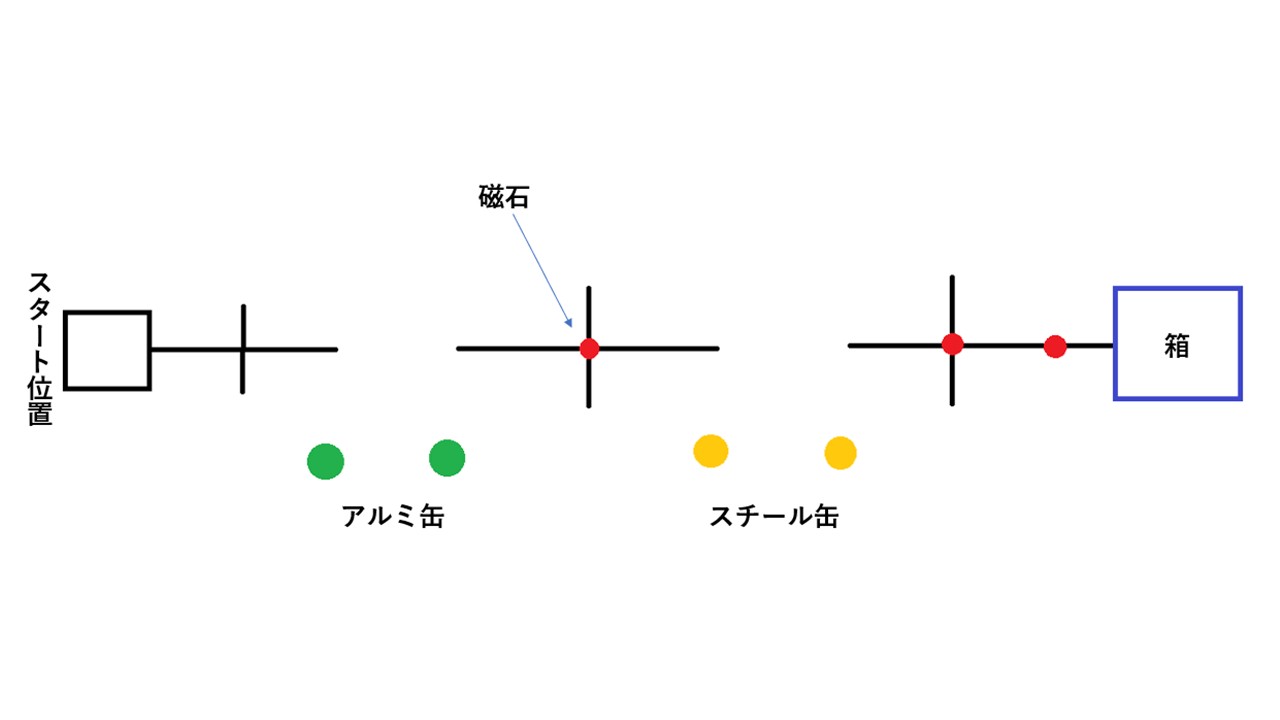
Image 2

Specs and Results

  • Design Features: Developed a unique collection mechanism that accounted for the properties of aluminum and steel cans. Reliability was improved by redesigning the mechanism one week before the competition.
  • Competition Results: Efficiently collected both types of cans, achieved high scores in every match, and won the competition.
  • Challenges and Improvements: The initial design had a low success rate, but significant improvements ensured a much higher success rate, particularly by enhancing the mechanism to securely place cans in the box.
  • Learnings: The challenges associated with major design changes fostered problem-solving skills and execution capabilities. Through participation in the competition, I gained a deeper understanding of the importance of autonomous control and its technical applications.
< Robot Competition Management 2nd-Year Robot Contest >